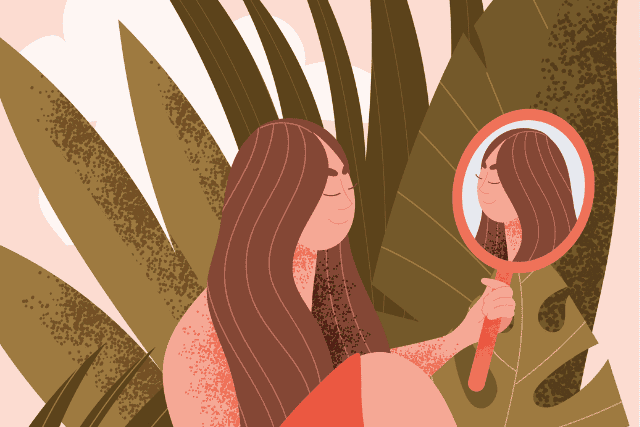
When Love Feels Like Pain: Lessons I Learned the Hard Way

When Love Feels Like Pain: Lessons I Learned the Hard Way

“Sometimes the person you love the most is the one who teaches you the hardest lesson about yourself.” ~Unknown

I once thought that being in a relationship meant sacrificing parts of myself for the sake of “love.”

I stayed when I should have left.

I forgave when I hadn’t healed.

I silenced myself when I needed to speak. I gave up my voice, my boundaries, and my sense of emotional safety. I stopped expressing my needs to avoid conflict. I minimized my feelings so I wouldn’t be “too much.” I slowly disconnected from the parts of me that felt confident, joyful, and secure.

And in the process, I slowly forgot who I was.

I didn’t realize it at the time, but I was in a toxic relationship, one where love came mixed with manipulation, control, and inconsistency. It wasn’t all bad, which made it harder to leave. But the highs and lows were so intense that my nervous system was always on edge.

The Cycle I Couldn’t See

It always started with charm.  After a fight, he would apologize for raising his voice or for disappearing, promise that he would communicate better, and reassure me that I was “the one” and that he didn’t want to lose me. Those moments made me feel chosen again.

Then came the criticism. He often told me that I was too sensitive or that I misunderstood his intentions. When I tried to express my needs or set a boundary, the warmth disappeared, replaced by distance and silence.

Finally, the explosion: arguments that left me drained and ashamed, followed by another round of apologies and affection.

This cycle kept me trapped. It wasn’t just about the relationship anymore; it became about proving my worth. If I could just be “better,” maybe the love would finally be consistent.

Why We Stay

Looking back, I ask myself: Why did I stay? Why do so many of us stay in relationships that clearly hurt us?

The truth is, toxic relationships don’t start toxic. They often start with intensity, passion, and connection. That initial bond feels so strong that when things shift, we convince ourselves it’s temporary.

We also stay because of fear—fear of being alone, fear of starting over, fear that maybe this is the best we’ll ever have.

And often, deeper than fear, there’s a wound. Mine was the belief that I wasn’t good enough.  That belief didn’t start in this relationship; it was shaped by earlier relationship experiences and followed me into this one. Then, over time, it was reinforced. Each dismissal, each inconsistency quietly confirmed a story I already knew too well. This belief made me accept breadcrumbs when I deserved the whole meal.

The Turning Point

One night, after yet another fight, I sat on the bathroom floor in tears. I remember staring at myself in the mirror and not recognizing the person looking back.

I was exhausted. My body was tense all the time. I couldn’t focus at work. My friendships had grown distant. My world had shrunk to the size of this relationship.

And then a simple question came to me: If nothing ever changed, could I live the rest of my life like this?

The answer was a painful but clear no.

That was the beginning of my healing, not the end of the relationship immediately but the start of reclaiming myself.

What Leaving Actually Looked Like

People often talk about leaving a toxic relationship like it’s a single moment.

It wasn’t like that for me.

Leaving was a process. A messy, emotional, back-and-forth process.

The hardest part wasn’t packing my things; it was battling my own thoughts: What if I’m overreacting? What if no one else will love me? What if he changes the moment I leave? What if I’m making a mistake?

There was guilt, fear, and surprisingly… grief.

Even when a relationship is unhealthy, the attachment is real. The hope is real. The memories are real.
Letting go felt like mourning a version of myself that never truly existed.

What helped?

Support.

I reached out to two close friends who reminded me of who I was before the relationship. Talking to them grounded me. They gave me perspective when I doubted myself.

Space.

I limited contact. Not out of anger but out of self-preservation. I kept my distance from the places he used to go to and avoided conversations that would pull me back into the drama. Every message or call that came through was a test of whether I could protect my peace.

Small daily acts of self-respect.

Eating well. Going on walks. Journaling. These simple routines rebuilt my confidence and reminded me that I was capable of taking care of myself.

Leaving wasn’t a clean break. It was shaky, emotional, and full of second guesses. But every day away from the chaos felt like breathing again.

What I Learned About Toxic Love

Through this journey, I’ve learned some truths that I wish someone had told me earlier:

Love without respect is not love.

If your partner belittles, manipulates, or controls you, that is not love. It is power disguised as affection.

Consistency matters more than intensity.

A healthy relationship may not feel like a roller coaster, but its steadiness creates safety.

Boundaries reveal the truth.

When you set a boundary and someone repeatedly ignores or punishes you for it, you see who they really are.

For me, it was things like asking for honest communication, requesting time for myself without feeling pressured or judged, or saying no to plans that didn’t feel right. Each time I tried to assert these simple boundaries, they were dismissed or met with frustration, slowly showing me how little respect there actually was in the relationship.

Healing begins with you.

Leaving a toxic partner doesn’t automatically heal your wounds. It’s the beginning of the work: unlearning patterns, building self-worth, and creating a healthier relationship with yourself.

For me, that meant noticing how often I apologized to keep the peace, ignored my own needs to avoid conflict, and doubted my instincts when something felt off. Recognizing these patterns was painful, but it was the first step in taking back my power and learning to trust myself again.

How to Start Healing

If you recognize yourself in my story, here are some steps that helped me:

Name the reality.

Stop minimizing or romanticizing what’s happening. Call it what it is: toxic.

Reach out for support.

Whether it’s friends, therapy, or a support group, don’t isolate yourself. Toxic relationships thrive in secrecy.

Reconnect with yourself.

Do the things you love, even if small. Write, paint, walk, dance. Remind yourself of who you are outside of the relationship.

Practice self-compassion.

It’s easy to judge yourself for staying. Instead, recognize that you did the best you could with what you knew at the time.

Create a vision for healthy love.

Write down how you want to feel in a relationship—safe, respected, valued. This vision becomes a compass for future choices.

Looking Back with Gratitude

Strangely enough, I am grateful for that relationship now. Not for the pain but for the lessons.

It showed me the parts of myself that were wounded and seeking validation. It forced me to confront my beliefs about love and worthiness.

Most importantly, it pushed me to build a stronger relationship with myself, the kind of relationship that sets the tone for every connection I allow into my life.

If you’re reading this, and you’re in a toxic relationship, I want you to know that you are not weak for staying, and you are not broken for leaving. None of this is a reflection of your worth. It’s a reflection of wounds that are ready to be healed. And once you start seeing clearly, you realize you never have to settle for less again.

About Melany Essentials

Melany Essentials shares insights from her own journey through toxic relationships and the lessons she learned about self-worth, patterns, and love. Through her experience, she created a FREE guide, to help readers uncover hidden emotional patterns, reflect deeply, and take their first steps toward healthier, more fulfilling love. Grab it here for free: Why You Keep Attracting TOXIC Partners and How to STOPFor questions or feedback, you can reach her at : melany@melanyessentials.com

Get in the conversation! Click here to leave a comment on the site.


from Tiny Buddha https://ift.tt/1iM7TEK

The Simple Words That Reshaped How I See Myself

The Simple Words That Reshaped How I See Myself

“Only say good words to your child. Even if it looks like they’re not listening, if you repeat those kind words a hundred or a thousand times, they will eventually become the child’s own thoughts.” ~My grandmother

When I think about my childhood, the first word that comes to mind is “night.”

The nights were always the hardest.

My father struggled with alcohol and sometimes turned that pain into violence at home.

As a kid, I felt like danger could appear at any time after the sun went down.

I was afraid to sleep deeply. I kept the light on in my room because darkness felt like losing control.
I slept with my head right next to the door, leaving it slightly open. I wanted the door to bump my head if anyone came in so I would wake up fast.

Part of me was afraid that my father might come into my room and do something while I slept.
Another part worried that he might hurt my mother and I wouldn’t hear it. So I stayed half awake, listening for every sound, ready to jump up and protect her, even though I was just a small child.

Living like this made school feel impossible.

I was too tired to focus, and my body was full of tension from every night. On top of that, people in our neighborhood knew about my father.

Some parents told their children not to be friends with me because of his reputation. At school, I often sat alone. I watched other kids laugh together at lunch while I ate quietly in the corner.

Teachers mostly saw the trouble I caused when my pain exploded into bad behavior. They scolded me often, and soon I started to believe that there was something deeply wrong with me.

In my own mind, I wasn’t a kid who was scared and exhausted. I was “the bad one,” the problem child, the one everyone avoided. I didn’t know how to change that story, so I just wore it like a heavy coat.

My mother was struggling too. She was hurt by my father, worried about money, and constantly anxious about what might happen next. Sometimes, when I caused trouble, she yelled at me because she had no energy left. I don’t blame her—she was doing her best in a situation that felt impossible.

One day, my grandmother visited and saw my mother shouting at me. Afterwards, she pulled my mother aside and said something that changed our lives.

She told her, “Only say good words to your child. Even if it looks like he’s not listening, if you repeat those kind words a hundred or a thousand times, they will eventually become his thoughts.”

My grandmother believed that repetition of love could rewrite a child’s inner world.

My mother took this more seriously than I could have imagined. She started carrying a small notebook.
Inside it, she wrote sentence after sentence—things she wanted me to believe about myself. The pages were full, almost bursting with her hopes for me.

Every day she chose a different line to tell me. Sometimes she said, “You are a kind boy.” Sometimes, “You can grow into a gentle, strong adult.” Other times, “No matter what you did today, you still have a good heart.”

At first, I didn’t trust these words. They felt like lies because my daily life didn’t change overnight.
Kids still avoided me, teachers were still strict, and my father still drank.

Inside, my mind answered, “No, I’m not kind. I’m broken.” But my mother didn’t stop. Even on days when I made big mistakes, she opened her notebook, looked at her list, and chose another good sentence for me.

She repeated these words like a quiet prayer over my life. Sometimes she probably didn’t believe them fully herself, but she said them anyway.

Slowly, something started to shift. I still remember the first time a teacher praised me for helping another student. For a second. I thought, “Maybe I really can be kind.” It was like my mother’s words had been waiting inside me for the right moment to wake up.

As the years passed, those sentences became a new inner voice. I began to imagine a future where I finished school, found meaningful work, and became a gentle adult instead of repeating my father’s patterns.

I still had scars and anger, but I also had this steady background music of kindness in my mind.
It gave me just enough courage to keep going.

Eventually, I went to university. I studied programming and found something I was good at. The first time I was able to buy my mom a phone with my own salary, I felt like I had crossed a line my childhood self never thought possible.

I wasn’t the “bad kid” anymore; I was an adult who could give back to the woman who never gave up on me.

Looking back, I see that my life didn’t change because someone gave me a perfect plan. It changed because someone chose different words over and over again, even when everything around us was still messy.

Love arrived in the form of sentences whispered repeatedly, like drops of water slowly carving a new path through stone. My grandmother was right: words repeated a hundred or a thousand times eventually become thoughts.

At first, my mind was full of sentences like “I’m dangerous,” “I ruin everything,” and “No one wants me.”

My mother’s notebook gave me new sentences: “I’m learning,” “I can be gentle,” “I have a future.”

Over time, those new sentences became the ones that felt most true.

I know not everyone has a mother or grandmother like mine. Many people grow up without anyone to speak kind words over them. Some of us are even surrounded by people who say the opposite—that we are lazy, hopeless, or unlovable.

If that’s you, I’m so sorry. I know how heavy those words can feel.

But here is what my life has taught me: even if no one else has done this for you yet, you can start doing it for yourself.

You can become the one who writes a notebook full of good sentences about your own heart.

You can choose one new sentence each day and repeat it until it doesn’t feel like a lie anymore.

You can decide that your inner voice will be the first place where a different story begins.

If you grew up in fear, like I did, maybe nights are still hard for you. Maybe your body remembers things that your mind tries to forget. On those nights, instead of fighting yourself for being scared, you might try putting one hand on your chest and whispering something gentle, like, “It makes sense that you’re afraid. But you’re not alone anymore.”

It won’t erase the past, but it can soften the present.

If you’re a parent or caregiver, or if there’s a child in your life who is struggling, remember what my grandmother said. They may roll their eyes or act like they don’t care. They may even push you away. But your kind words are still landing somewhere deep inside them, planting seeds they might not recognize until years later.

I used to think healing meant suddenly becoming strong and fearless. Now I think healing often looks like this: a small child who used to sleep with his head against the door grows into an adult who can finally turn off the light at night.

Not because the world is perfectly safe, but because he now carries a different voice inside him—a voice that says, “You are worth protecting. You are allowed to rest.”

My life began in a home full of shouting and broken glass. It could have easily ended there, in the same patterns of anger and pain. But my grandmother’s wisdom, my mother’s notebook, and those repeated sentences gave me a different path.

If you’re reading this and you feel stuck in your old story, I want you to know something. You don’t have to pretend that everything was okay. Your pain is real, and it deserves respect.

But your story isn’t finished, and you are not only what happened to you. You are also the words you choose today.

Maybe you start with just one simple sentence, whispered to yourself in the quiet: “I am more than my past.”

Say it a hundred times if you need to. Say it a thousand.

One day, you might look back and realize that this sentence became the foundation of an entirely new life.

*I don’t speak English well, so I used ChatGPT to help me translate my story. But everything you’ve read comes from my own memories and my own heart. I wrote this because I deeply want to share what my family’s love taught me about healing.

About Chanhyeok

Chanhyeok is an indie programmer from Korea who grew up in a home shaped by his father’s alcoholism and his mother’s quiet courage. He now creates small tools that help people speak more kindly to themselves. His first iOS app, Self Suggestion, sends gentle affirmation reminders to your lock screen in eight languages. You can find it here: https://apps.apple.com/en/app/SelfSuggestion/id6754752885

Get in the conversation! Click here to leave a comment on the site.


from Tiny Buddha https://ift.tt/ITOWmMF

What Losing My Brother Taught Me About Addiction, Shame, and Love

What Losing My Brother Taught Me About Addiction, Shame, and Love

“Protest any labels that turn people into things. Words are important. If you want to care for something, you call it a ‘flower’; if you want to kill something, you call it a ‘weed.’” ~Don Coyhis

Losing my brother to a substance use disorder taught me things I never wanted to learn. Things nobody prepares you for. Things that will change you in ways you never thought possible.

It taught me that you can love someone so much it physically hurts—and still not be able to save them. It taught me that you can mourn someone you love long before they are physically gone, and no one tells you how helpless that feels. How humiliating. How you start bargaining with the universe in silence: Take anything you want from me. Just give him a little more time.

But the universe didn’t listen to me. Addiction didn’t bargain with him. It just took. It took his soul, his mind, his spirit, and the light from his eyes.

Before he died, I kept trying to hold onto the version of him I grew up with—the real him. The one who teased me until I laughed so hard I couldn’t breathe. The one who showed up for everyone else, even when he couldn’t show up for himself. The version of him no one else saw. I held onto those memories like lifelines, because the reality of addiction felt like watching him drown in slow motion.

And here’s the part most people will never understand unless they’ve lived it: you start grieving long before they die.

Every relapse feels like a funeral. Every “I’ll call you back” becomes a silent prayer. Every silence becomes a question you’re too afraid to voice: Are they alive? Are they gone? Are they alone? Every question leads you to calling hospitals, jails—anyone who may know where they are and can help you find them… alive.

Then the day comes when the phone rings for real, and your whole body knows before your brain does. You answer anyway. You listen. You break. And a part of you you’ll never get back collapses with him.

After he died, the world expected me to be “strong,” to say things like “He’s finally at peace” or “He’s in a better place.” I wanted to scream. I wanted to run. I wanted to be anywhere else but here without him. I didn’t want him in a “better place.” I wanted him here. Messy, imperfect, trying—but alive. Alive and able to see his daughter grow up, to see his niece and nephew become who they are today, and to be the person I always knew he could be, sober.

What his death taught me is not soft. It’s not poetic. It’s raw and painful. It takes away a part of you that you never thought you’d lose. It makes you feel like you can’t breathe. You can’t sleep or eat, and you feel guilty for smiling throughout the day.

I learned people judge addiction until it hits their family. Then suddenly it becomes “complicated.” Personal. Human. Before that, they throw around words like “junkie,” “choice,” and “his fault.” They don’t know addiction sits in the same category as a terminal disease—brutal, consuming, terrifying, and unfair.

I learned grief is violent. It explodes your sense of reality. You think you’ll cry and move through it, but grief has claws. It drags you back into memories you weren’t ready to replay, dreams that feel too real, and guilt you didn’t earn but carry anyway. I learned that it can come at any moment, at any time, and hit you like a moving train. It becomes all-consuming. You feel it deep in your soul, and you often feel like you will never wake up from this nightmare.

I learned I can be angry and love him at the same time. I’m angry he didn’t get one more day. Angry the world didn’t understand him. Angry at everyone who judged him. Angry that he left me here alone, something he said he’d never do. Angry at addiction for getting the last word. But my love for him never left and never will. Not for one second.

And here’s the hardest lesson losing him taught me:

You stop expecting closure. You stop expecting the pain to fade. Instead, you learn to live alongside it—like a bruise that never fully heals. You learn to smile through the pain. You learn to let the grief come when it shows up, and to always speak his name and his truth.

But there were lessons too—the kind you only understand after being cracked open:

I learned to tell the truth. Not the polished version of his story. Not the version that makes other people feel comfortable. I tell the version where addiction was part of his life. Not because it defines him, but because hiding it erases him.

I learned to see suffering in other people—the quiet kind that hides behind smiles and “I’m fine.” Losing him made me softer toward strangers, more patient, more protective. It made me realize that everyone is carrying something they’re terrified to say out loud.

And strangely, painfully, I learned love doesn’t die with the person. It settles into your bones. It becomes something you carry for the rest of your life—the ache, the anger, the gratitude, the memories, all mixed together.

Losing my brother taught me that the world can break you… and you can still keep going. Not because you’re strong, but because you don’t have another choice.

I wish I didn’t have these lessons. I wish he were still here. But since he’s not, all I can do is carry him honestly—not the sanitized version people prefer, but the real one.

The brother I lost. The brother I loved. The brother addiction couldn’t erase. The brother who will never be forgotten.

In loving memory of Joshua O’Neill Gray (August 6, 1982 – August 29, 2019).

About Sheena Crist

After her brother passed, Sheena made it her mission to raise awareness about substance use and substance use prevention. She obtained her degree in Behavioral Health Science with an emphasis in substance use disorders, and she has made it her passion to speak Josh’s name whenever she can. Addiction can impact anyone, and it doesn’t matter what your race, gender, or economic status is.

Get in the conversation! Click here to leave a comment on the site.


from Tiny Buddha https://ift.tt/Ju867KZ

Breaking the Cycle of “There’s Something Wrong with Me”

Breaking the Cycle of “There’s Something Wrong with Me”

“The wound is where the light enters you.” ~Rumi

“I can’t do anything right. There’s something wrong with me.”

My daughter said these words quietly, almost as if she didn’t want me to hear them. But I did. And the moment I did, something in my chest cracked open.

I knew that feeling. I’d carried it my entire childhood.

We were in the kitchen; I sat on the floor and pulled her next to me. My mind racing while I tried to keep my focus on her, eyes full of compassion, as if I could pull her inside me to protect her from all harm. Where was this coming from? She was bright, creative, deeply feeling. She was exactly as she should be.

But she believed there was something wrong with her. Just like I had believed I was fundamentally flawed.

In that moment I had a bittersweet realization, a light bulb moment that didn’t make the pit in my stomach any lighter: I had unconsciously recreated the exact dynamic I’d grown up in. The one I thought I’d escaped. The one I’d promised myself my children would never experience.

Just to be clear, my father is a man I deeply admire. He taught me resilience, independence, the value of hard work. He modeled integrity in ways that shaped who I am today. In so many aspects, he was a fantastic role model.

I worshipped him.

But humans don’t go through life unscathed—that’s how we grow. And beneath all the qualities I admired, there was something I internalized without even knowing it: his approval was always just slightly out of reach.

Not because he was cruel. Not because he didn’t love me. But because the bar kept moving. Because his attention went elsewhere—to work, to stress, to whatever consumed him in that moment. Because I could never quite figure out what would make him truly see me.

I tried everything. I performed. I achieved. I made myself small when needed and loud when that seemed to work better. I studied him like a language I needed to master. But no matter what I did, I couldn’t shake the quiet belief underneath it all: There’s something wrong with me. If I could just figure out what it is and fix it, then he’d see me and be proud.

I spent my childhood chasing approval that always felt just out of reach. And when I couldn’t get it, I decided it must be because I wasn’t quite enough.

Years later, I was living abroad with two young children, in a marriage I didn’t yet understand. I’d convinced myself I was making different choices. I had done the work—therapy, journaling, deep self-awareness. I knew my wounds. I’d promised myself I would never recreate what I’d experienced.

But knowing isn’t healing.

My nervous system didn’t care about my conscious intentions. It recognized something familiar and called it home. I’d unconsciously chosen a dynamic where approval felt conditional. Where I was always trying, always adjusting, always wondering what I’d done wrong this time.

I didn’t see it at the time. I thought I was just working through normal relationship challenges. I thought if I could just communicate better, be more patient, figure out the right approach, things would shift.

It took divorce and the distance it created to finally see what I’d done.

The difference between my daughter and me? She can name it. She can say out loud: “I can’t do anything right. There’s something wrong with me.” I never could. I just carried it silently, like a stone I didn’t know I was holding.

She’s further along than I was at her age. She feels deeply and sometimes questions whether her feelings are wrong. She notices when she feels inferior to her brother, to other children her age. She’s aware of the chase—trying to win love that feels like an unreachable target.

And watching her struggle with the same wound I carried broke something open in me.

This is what I’d unconsciously passed down. Not through my parenting—I’m genuinely different with my children than my parents were with me. But through the life I’d built before I understood what I was doing. Through the patterns I’d set in motion before I’d started to heal my wounds.

There’s something profound and heartbreaking about watching your child live out your unhealed wounds. It’s a mix of sadness, contemplation, and a strange kind of clarity.

Life runs in circles if left unattended. The wounds we don’t heal, we pass down—not always through our actions, but through the environments we create, the dynamics we unconsciously choose, the patterns we haven’t yet learned to break.

I couldn’t protect my daughter from everything. I couldn’t undo the structures I’d built before I woke up. And I had to sit with that—the humble, painful truth that my unconscious choices had created ripples in her life that I couldn’t fully control.

I also realized that she’s on her own path. And so am I.

I can’t fix this for her. I can’t go back and make different choices that would have spared her this wound entirely. But I can do something my parents couldn’t do for me: I can see her. I can mirror back her wholeness, even when she can’t feel it herself. I can let her vocalize what I had to silence.

And I can do my own healing—not just by intellectually understanding my patterns, but through feeling them, processing them in my body, integrating the parts of myself that are still stuck in that childhood chase for approval.

The parent I am today is unrecognizable from the one I grew up with. My children know safety with me. They know they’re seen. They know their feelings aren’t wrong.

But I also know they’ll carry some wounds I couldn’t prevent. And that’s part of their journey too. I have to trust that they’ll find their own path through, their own healing, their own light—just like I’m finding mine.

Breaking the cycle doesn’t mean my children grow up without wounds. It means I’m doing the heavy lifting, so the wounds don’t stay unconscious, don’t stay unspoken, don’t run in circles for another generation.

When my daughter said, “There’s something wrong with me,” I could hold her and say with complete certainty, “There’s nothing wrong with you. Not one thing.” Then I have her tell me all the things she’s proud of herself for—for being, doing and feeling—so she can internalize wholeness regardless of external approval.

I couldn’t say that to myself for most of my life. But I can say it to her. And I’m learning to believe it about myself too.

That’s the cycle breaking. Not perfectly. Not completely. But breaking, nonetheless.

About Karine Flynn

Karine Flynn is a trauma-informed Psychotherapist who discovered the hard way that knowing your story isn't the same as healing it. After unconsciously recreating the patterns she thought she'd escaped, she now helps others understand the difference between intellectual awareness and embodied healing. She lives with her two children and is still learning, still healing, still breaking cycles. You can learn more at https://www.mindandsoul.uk

Get in the conversation! Click here to leave a comment on the site.


from Tiny Buddha https://ift.tt/2KQj6iJ

Want to Eat Healthier and Feel Better on Your Skin?

Want to Eat Healthier and Feel Better on Your Skin?

Would you say you’re a healthy eater? If not, is this a goal for you?

For years, people thought of me as healthy because I rarely ate meat or desserts. But it was more that I was desperate to stay thin, and I consumed tons of processed food and sugary candy because I could eat them without gaining weight.

Now that I’m older, and especially since I have children, I’m much more conscious of what I eat. I want to actually nourish my body so I can keep up with them for years to come, and I hope to make 100 trips around the sun before I leave this earth.

But healthy eating can be exhausting. Figuring out who to believe and what to eat… finding time to cook more than the old standbys… resisting the urge to DoorDash something tasty and prepared by someone else…

I struggle with all of this sometimes. And I fantasize about one day having the time in my schedule to learn to cook simple, healthy meals that actually taste good.

But maybe I don’t need to wait years for some perfect moment—maybe I just need a little Jules Clancy in my life. And maybe you do too.

Jules was also one of Tiny Buddha’s earliest contributors, so I’m always happy to share her work and what she’s creating now as a food scientist turned cooking coach.

Full disclosure: Jules is sponsoring this email, but I’m sharing it because I genuinely appreciate her approach and the helpful programs she creates.

Her latest offering is especially compelling to me, and I think it might call to you too:

It’s called Joyful Cooking for Natural Vitality—and you can try it for just $1 for 21 days. ($1!)

This is a six-month coaching program designed to help you replace harmful food habits with better ones and learn how to cook simple, healthy meals without relying on recipes, using whatever you have in your fridge.

The goal isn’t just to “eat healthier.” It’s to make it easier to eat in a way that helps you feel better in your body—more energy, fewer cravings, clearer thinking, and that calmer, steadier feeling that makes life feel more manageable.

I especially appreciate her focus on gut health. This term wasn’t really on my radar until recently, but I now understand that gut health is crucial for immunity, disease prevention, and mental health. It’s one of those things that affects everything—energy, mood, cravings, inflammation—and a lot of us are walking around feeling off without realizing food habits are a big part of it.

After Joyful Cooking for Natural Vitality You’ll:

✓ Have tiny habits that support lifelong vitality (so you take good care of yourself even when life gets busy).

✓ Pull together delicious nourishing meals WITHOUT recipes

✓ Actually WANT to cook healthy meals(even after terrible days)

✓ Feel better about how you look and how you feel in your clothes

QUICK DETAILS

Program Start Date: Feb 5th, 2026

Duration: 6 months 

Time Investment: 20-minute weekly zoom calls (replays available)

Investment: $1 trial for 21-days then monthly payments of $49

BONUS: Buy-one-get two memberships FREE Dietary Requirements: suits all dietary needs 

Tiny Buddha Exclusive Discount: Save 10% use code TINYBUDDHA at check out 

If this sounds like something you’d love support with, here’s the page to read more and watch the free class:

I firmly believe that every goal we set in life is more attainable if we’re physically and mentally strong. That starts with what we put in our bodies. It’s much easier to choose the good stuff when it’s simple and repeatable enough to become second nature.

Jules’ program can help you do just that.

If you decide to give it a try, I’d love to know how it works for you.

One last thing! Here’s a quick testimonial from a former member: “This feels like cooking FREEDOM. I’ve hated cooking my whole life. Now I LOVE being able to make something up on the fly without looking at a recipe.”

Don’t forget to use your exclusive discount code TINYBUDDHA for 10% off! You can ​learn more here​. 

About Lori Deschene

Lori Deschene is the founder of Tiny Buddha. She started the site after struggling with depression, bulimia, c-PTSD, and toxic shame so she could recycle her former pain into something useful and inspire others to do the same. You can find her books, including Tiny Buddha’s Gratitude Journal and Tiny Buddha’s Worry Journal, here and learn more about her eCourse, Recreate Your Life Story, if you’re ready to transform your life and become the person you want to be.

Get in the conversation! Click here to leave a comment on the site.


from Tiny Buddha https://ift.tt/xk5T96S

AI Helped Me Sound “Better” and Feel Worse

AI Helped Me Sound “Better” and Feel Worse

It was close to midnight the first time it really hit me.

I was sitting alone at my kitchen table, still in work clothes, phone in hand. I’d come straight home after a long day of back-to-back meetings, staff conversations, and one decision I’d been avoiding for weeks—a call that would affect someone’s role, their income, and their sense of security. By the time I got home, I was too wired to sleep and too tired to change.

The house was quiet.

On the screen was a chat window.

Not with a friend. Not with a therapist. With an AI.

I’d just typed out a long, messy paragraph about a staff issue, the weight of leadership, and the guilt of feeling utterly drained when my job is literally about caring for others.

“I feel like I’m failing everyone,” I wrote.

Within seconds, the reply appeared: calm, validating, beautifully worded.

“It’s understandable that you feel this way given the emotional load you’re carrying…”

Something in me relaxed. Something in me hollowed out.

Because during the day, I run a large mental health service. I’m the person others come to when they’re overwhelmed, scared, or stuck. I’m supposed to be the one who knows what to do, who can hold complexity without flinching.

But that night, I realized I’d quietly handed my own inner life over to a machine.

Not dramatically. Just one exhausted conversation at a time.

When Help” Starts to Replace Self”

From my vantage point, I see a strange double life playing out.

In meetings, casual conversations, and WhatsApp chats, I hear people say things like:

“I wrote my message in AI first so I didn’t sound too emotional.”
“I checked with a chatbot if I was overreacting before I replied.”
“Sometimes it’s easier to talk to it than to anyone else.”

Leaders, colleagues, friends, we’re all quietly doing the same thing.

We turn to AI to:

  • Find the “right” tone so we don’t upset anyone
    • Make our feelings sound reasonable, not “too much”
    • Get quick answers when we’re too tired to sit with questions

It’s not evil. It’s not weak. It’s human to want reassurance, comfort, and confirmation that we’re doing the right thing.

But as I watched this pattern in people around me and then caught it in myself at midnight in my kitchen, I had to face something uncomfortable:

In trying to hold everyone else together, I’d stopped knowing what to do with my own feelings.

AI hadn’t created that problem. It had just made it easier not to notice it.

The Pattern I Couldn’t Unsee

Once I saw it, I started noticing the same theme again and again.

A manager used AI to soften a piece of honest feedback so it sounded “less disappointed.”

A friend used it to rehearse telling their co-founder they were burning out and couldn’t keep working at the same pace.

Someone else, a senior clinician I work with, used it to draft a message to me because they were terrified of saying the wrong thing about their workload and feared it might come across as ungrateful or unprofessional.

Underneath all of these moments was the same quiet fear:

“If I say it how I really feel, I might lose something—respect, connection, my job, my relationship.”

So we hand our words to a system that never flinches, never blushes, never gets triggered. It gives us back something smoother, kinder, more balanced.

And slowly, almost invisibly, we start to trust that more than we trust ourselves.

The more I saw this in others, the more I had to admit:

I had been doing the same thing with my own life, not for days or weeks, but for years. Each time I chose polish over honesty, regulation over truth, I moved a little further away from myself. Over time, it left me clearer in my head but increasingly disconnected from my body, my instincts, and my sense of what I actually wanted.

The Night My Friend Asked What I Was Avoiding

One evening, after a particularly heavy week, I was on a call with a close friend.

We often talk about the chaos of building things that matter, team issues, cash flow, complicated decisions, and the emotional hangover of responsibility.

I did my usual summary:

“It’s been a big week, but it comes with the territory. We’re growing, and it’s a privilege, and I’m grateful…”

He was quiet for a moment and then said:

“That all sounds very polished. How are you actually?”

I paused.

My first instinct was to give a tidy, measured answer, the kind that sounds good on a podcast or in an email newsletter.

Instead, I noticed my mind reaching for familiar phrases I’d seen on screens:

“It’s understandable that I feel…”
“On the one hand… on the other hand…”
“A more balanced view would be…”

They sounded wise. They did not feel true.

For a few seconds, I couldn’t actually find my own words.

I had become so used to expressing myself in careful, well-regulated language—for staff, for partners, for stakeholders—that I’d almost forgotten how to speak as a person, not as a role.

I couldn’t blame AI for that. But it had certainly helped me avoid noticing it.

That conversation left me with a simple, unsettling question:

When did I stop trusting my own voice?

What I Was Really Afraid Of

When I finally stopped long enough to listen underneath the polished language, I found a very simple fear:

“If I let myself be fully honest, everything might fall apart.”

If I admit that I sometimes feel overwhelmed, will my team trust me less? If I tell a friend I’m too tired to support them tonight, will they think I don’t care?

AI had become a perfect hiding place for that fear.

I could pour out my unfiltered thoughts without risking anyone’s disappointment. I could receive advice and validation without feeling like a burden. I could feel momentarily “held” without having to navigate anyone else’s reactions.

But after each conversation, I noticed something:

My head felt clearer. My body did not.

Because my nervous system didn’t actually need more perfectly formatted sentences.

It needed to know that my real, messy self was allowed to exist in front of people, not just in private chat logs.

Learning to Come Back to Myself (Without Pretending We Live without Tech)

I didn’t suddenly delete every AI app and move to a cabin in the woods.

I still live in a world where technology is everywhere, and I still use it in my work.

But I made a quieter promise to myself:

“I will use technology to support my humanity, not replace it.”

That meant changing a few habits.

First, I started checking in with myself before checking in with a system.

Before I ask any tool, “What should I say?” I ask, “What am I actually feeling right now?”

Sometimes I write it down plainly: “I’m scared this won’t work.” “I’m angry, and I don’t want to be.”

Only after I’ve named it do I decide if I want help shaping it. If I do, it’s there to refine my expression, not decide what’s acceptable for me to feel.

Second, I let humans back into the loop.

If something really hurts, I reach out to a person before I reach out to a machine. Sometimes it’s as simple as: “Today feels heavy. Do you have ten minutes later?”

It doesn’t always fix the problem, but every time I choose a human over a chat window, I send a message to my nervous system: I am not alone in this.

Lastly, I started protecting a few spaces where the unedited version of me is allowed to exist.

For me, that looks like:

  • No AI help for important emotional conversations with people I’m close to
  • No technology in the first thirty minutes after waking and the last thirty minutes before sleep
  • No using AI to rehearse difficult personal conversations

These aren’t rigid rules. Some days I break them.

But having any spaces where my words are allowed to come out wrong has reminded me that I can survive imperfection and that the people who care about me can too.

If You’re Quietly Doing the Same Thing

Maybe your circumstances are different from mine.

Maybe you’re running a small business, a household, a team, a life that other people depend on.

Maybe you’ve noticed you’re more comfortable typing your rawest feelings into a box than saying them out loud.

If so, here’s what I wish someone had told me sooner:

You’re not strange for finding AI comforting. It makes sense to turn to something that feels safe and predictable when people haven’t always been that for you.

You’re not “less mindful” for using technology. The issue isn’t the tool, it’s whether you’re still in the conversation with yourself.

The parts of you that feel too heavy, too dramatic, or too complicated are often the exact parts that most need to be met by a real, breathing, imperfect human being, including you.

You don’t have to stop using every supportive tool. You don’t have to suddenly pour your heart out to everyone in your life.

You could start much smaller:

  • One honest breath before you pick up your phone
  • One sentence of truth in a conversation where you’d usually say, “I’m fine”
  • One person you let see you before you’ve tidied yourself up

Closing

AI can help you organize your thoughts.

Only you can decide that your messy, unfiltered inner world is worth listening to.

And if you forget, because I still do, often, remember this:

Underneath the emails, the roles, the prompts, and the noise, there is still a quiet part of you that knows when something feels off, and when something feels true.

That part deserves more than a cursor blinking back at it.

It deserves you.

About Alexander Amatus

Alexander Amatus, MBA is Business Development Lead at TherapyNearMe.com.au, Australia's fastest growing national mental health service. He works at the intersection of clinical operations, AI-enabled care pathways, and sustainable digital infrastructure. He is an AI expert who leads a team developing a proprietary AI powered psychology assistant, psAIch.

Get in the conversation! Click here to leave a comment on the site.


from Tiny Buddha https://ift.tt/LfVhHCc

What Happened When I Gave Myself Permission to Choose

What Happened When I Gave Myself Permission to Choose

“Between stimulus and response there is a space. In that space is our power to choose our response. In our response lies our growth and our freedom.” ~Viktor E. Frankl

I stood in my kitchen, staring at the leftover red velvet cake from my birthday party the night before. It was beautiful: layers of deep red with cream cheese frosting that I knew tasted incredible. And for the first time in years, I heard something different than the voice that had ruled my life.

For so long, there had been this other voice. Dominating. Controlling. It told me exactly what I could and couldn’t eat, when to eat, and how much to eat.

And the convincing part? It made me believe it was helping me. Protecting me. Keeping me safe.

But I wasn’t safe. I was trapped.

My eating disorder didn’t feel like a disorder at the time; it felt like the only way to maintain control in a life that felt chaotic. The voice was so persuasive, so constant, that my true self became a prisoner. There was no choice, no freedom, just rules, and the exhausting work of following them perfectly.

What I didn’t understand then was what this was doing to my nervous system.

When We Have No Choice, Our Body Believes We’re in Danger

Here’s what happens biologically when we feel like we have no choice: our nervous system registers it as a threat. Think about it: when an animal is trapped with no escape route, it goes into survival mode. Fight, flight, or freeze.

Our bodies are wired the same way.

When we operate from a place of rigid rules and “have to’s” and “must not’s,” our nervous system stays activated. We’re constantly braced for danger. There’s no room to relax, to trust ourselves, or to simply be.

We’re running on a treadmill of control that never stops.

And if you’re someone whose brain works differently, if rigid structures have always felt suffocating, this feeling of being trapped is even more intense. Some of us need flexibility. We need options. We need space to move and adjust and find what actually works for us, not what’s supposed to work according to someone else’s plan.

The Plans That Were Supposed to Save Me

I tried everything to recover. Meal plans with exact portions and timing. Structured eating schedules that left no room for intuition.

Therapist suggestions that made perfect sense on paper but felt impossible to follow in real life.

And every single time, something in me would rebel.

I’d start strong, determined that this time would be different. But within days (sometimes hours) I’d feel that familiar resistance rising. I’d break the rules, spiral into shame, then try even harder to control everything.

The cycle was exhausting.

What I didn’t know was that this rebellion wasn’t weakness. It wasn’t sabotage. It was my body’s way of protecting me from feeling even more trapped.

Each rigid rule was another wall closing in, and my nervous system was screaming for freedom.

The Moment Everything Changed

That day in my kitchen, something shifted.

I looked at that cake, that gorgeous, tempting red velvet cake, and instead of hearing “you can’t have that,” I heard myself say something new. “You’re allowed to eat the whole thing if you want. You’re allowed.”

“And if you feel sick afterward, if you feel terrible, that’s your choice. But you’re allowed.”

And then I stopped.

Because suddenly, I realized: I’m allowed to do this. But do I actually want to?

That question—that simple, revolutionary question—changed everything.

I stood there, feeling something I hadn’t felt in years. Space. Room to breathe.

The difference between permission and true choice.

No, I thought. I don’t want to eat the whole cake. I’d feel sick, tired, and uncomfortable.

That’s not what I actually want.

So I cut myself a slice. I sat down with it. I tasted it—really tasted it—with this sense of inner freedom I’d forgotten existed.

And halfway through the slice, I stopped. Not because I “should” stop. Not because the voice told me to.

But because I was done. I’d had enough.

The warmth that flooded through me in that moment. The relief, the quiet joy, was unlike anything I’d experienced in my recovery journey. This was what safety actually felt like. Not control, not rigid adherence to rules.

But the freedom to choose, and to trust myself with that choice.

Real Freedom Lives in the Space Between Permission and Choice

I realized I’d been denying myself this freedom for a long time, and not just with food.

We often think freedom means doing whatever we want, whenever we want. Or we think healing means finally having enough willpower to follow the “right” rules. But real freedom isn’t about permission or control.

Real freedom is about choice.

It’s about creating enough inner safety that you can ask yourself, “What do I actually want? What feels good for me? What choice honors both my present self and my future self?”

When we operate from choice rather than control, our nervous system can finally relax. We’re no longer trapped animals. We’re a person with agency, with wisdom, with the capacity to make decisions that feel aligned.

This principle extends far beyond eating disorders. Maybe you’re trapped by what you think your career “should” look like. Maybe you’re following relationship advice that doesn’t fit your reality.

Maybe you’re trying to force yourself into systems that leave you feeling like a failure.

The question is always the same: Are you operating from control or from choice?

Finding Your Way Back to Choice

If you’re ready to reclaim your freedom, the path begins with awareness.

Start by noticing where you feel trapped. What areas of your life are ruled by “have to,” “must,” and “should”? Where do you feel that familiar resistance or rebellion rising?

These aren’t signs of weakness; they’re clues pointing you toward where you need more freedom.

Next, give yourself permission first. Before you can make a true choice, you need to know you’re actually allowed. “I’m allowed to quit this job.” “I’m allowed to say no.” “I’m allowed to do this differently.”

Let that sink in. Feel what happens in your body when you say it.

Then comes the powerful question: What do I actually want?

Not what you’re supposed to want. Not what would make you “good” or “disciplined” or “successful.” What do you, in your deepest knowing, actually want?

This is where the real work happens. This is where you distinguish between the voice that’s been controlling you and your own inner wisdom. They sound different when you know what to listen for.

The controlling voice says, “You have to. You must. You’ll fail if you don’t.” It creates urgency and fear.

Your inner wisdom says: “I want this because…” It creates clarity and peace, even when the choice is hard.

Finally, trust the answer. Even if it surprises you. Even if it’s different from what you thought you wanted.

Your body knows. Your nervous system knows. And when you honor that knowing, you create real, lasting safety, the kind that doesn’t come from perfect control but from deeply trusting yourself.

The Freedom You’ve Been Looking For

The voice that once controlled me still shows up sometimes. But now I know the difference between its demands and my own inner wisdom. Now I know that freedom isn’t about perfect control; it’s about the radical act of choosing yourself, over and over again.

That slice of red velvet cake taught me something profound: I’d been so focused on whether I was “allowed” that I’d forgotten to ask what I actually wanted. I’d mistaken permission for freedom, rules for safety, and control for power.

But real power lives in choice.

It lives in the moment you realize you can say yes or no, not because someone gave you permission, but because you trust yourself enough to decide. It lives in honoring what your body tells you, what your heart knows, and what feels aligned with who you’re becoming.

This is the freedom that changes everything. Not the freedom to do whatever you want without consequences. But the freedom to choose consciously, to trust yourself deeply, and to know that you have the wisdom to navigate whatever comes.

You’ve always had this power. Sometimes we just need to remember it’s there.

About Ximena Niembro

Ximena Niembro is a trauma-informed coach and founder of The PowerFULL Path, specializing in helping ADHD and highly sensitive women heal their nervous systems and reclaim their power. With certifications in IFS, Somatic Healing, NLP, and CBT, she guides clients from survival mode to thriving through nervous system regulation and embodiment work. Drawing from her own healing journey, Ximena's work bridges psychology, spirituality, and lived experience. Connect at thepowerfullpath.com.

Get in the conversation! Click here to leave a comment on the site.


from Tiny Buddha https://ift.tt/QitpEDB

A Simple Practice That’s Keeping Me Out of Catastrophic Thinking

A Simple Practice That’s Keeping Me Out of Catastrophic Thinking

“Hope is not a prediction. It is the choice to believe something good is possible before we have proof.”

For most of my life, I lived with an internal alarm system that never turned off. I expected disaster around every corner—financial collapse, professional failure, health crises, humiliation, and loss. Catastrophic thinking wasn’t just a habit; it felt like responsibility. It felt like vigilance. It felt like survival.

As a documentary filmmaker, anticipating the unexpected is part of the job. We learn to obsess over what could go wrong—equipment failures, weather shifts, emotional volatility, permissions falling apart, safety concerns, or a once-in-a-lifetime moment slipping away. We become experts at scanning for danger, preparing for the failure before it arrives. It isn’t neurosis—it’s craft. It’s training. It’s how we keep the work alive.

But somewhere along the way, the survival mindset that served my professional life began dominating my personal life. My nervous system became a permanent emergency broadcast network. Even when I wasn’t filming, I braced for impact—every hour, every day, every night. Instead of protecting me, fear began consuming me.

And I didn’t know how to stop.

The Turning Point

Not long ago, after a series of intense months—fighting for disability accommodations due to declining vision from macular degeneration, struggling financially, supporting my adult children, and caregiving daily for my ninety-six-year-old mother—I reached a breaking point. I felt hollowed out, depleted, and terrified of the future.

One morning, while sitting with my mother, something unexpected happened. We were both exhausted, and the room was heavy with silence. Then she laughed—one of those rare, pure, bright laughs that sound like they belong to a much younger person. It filled the room like sunlight.

And something inside me shifted.

For the first time in years, I heard a different voice within me—quiet, gentle, unfamiliar. It said:

“Something good is going to happen.”

I didn’t trust it. I tried to push it away. My old reflexes argued immediately:

Don’t get your hopes up. Prepare for disaster. Protect yourself.

But the voice returned, steady and calm:

“No. Really. Something good is coming.”

It felt like the first deep breath after years underwater.

When Fear Stops Being Useful

Catastrophic thinking once served me. On a documentary set, when crisis hits, rapid reaction can save the day. You don’t have time to collapse. You act. You adapt. You move.

But there is a difference between reaction and response.

Reaction is panic.
Response is presence.

Reaction is fear.
Response is awareness.

Reaction is the body gripping.
Response is the mind opening.

I spent years reacting—to life, to pressure, to loss, to uncertainty. I was constantly bracing. I mistook tension for strength.

But filmmaking taught me something I had forgotten: The work only succeeds when we are fully present—not clenched, not afraid.

A filmmaker must learn to hold chaos without becoming it.

And a human being must, too.

The Practice of Hope

Since that moment with my mother, I have been experimenting with a simple practice. When fear tries to take over, I pause and ask:

“What if something good happens instead?”

Not as fantasy. Not as denial. As possibility.

When catastrophic thoughts begin their familiar cycle, I say:

“Thank you for trying to protect me. But I’m choosing hope now.”

And slowly, something extraordinary is happening: I am learning to expect good instead of disaster.

What Has Changed

Nothing external has changed—yet. My finances are still fragile. My vision is still declining. Caregiving is still demanding. The future is still uncertain.

But internally, everything is different.

I have stopped bracing. I have stopped rehearsing collapse. I have stopped assuming the worst.

And in place of fear, something new has begun growing: A grounded, humble, earned hope.

I find myself making decisions from possibility instead of panic: supporting my son’s study trip to Spain even though money is tight; continuing to submit my writing and books despite rejection; advocating for disability rights with clarity instead of desperation; choosing trust instead of dread; and writing from openness rather than defense.

I feel like I’m standing on the edge of a new chapter. And maybe the feeling itself is the beginning of the good thing.

For Anyone Who Needs This

If your mind constantly prepares for disaster, I understand. I lived that way for decades.

But here’s what I am discovering:

Survival is not the same as living. Fear is not the same as wisdom. Preparation is not the same as panic.

Hope isn’t naïve. Hope isn’t weak. Hope isn’t foolish.

Hope is a choice. Hope is a discipline. Hope is resistance.

So here is the practice I am using now:

Morning

What is one good thing that might happen today?

Evening

Where did hope appear today—even in a small way?

In the hard moments

“Something good is coming. I am choosing to believe that.”

Because the mind can be rewired. The heart can reopen. The narrative can change.

And I believe this with everything in me now: Something good is coming.

I am ready for it. And you can be, too.

About Tony Collins

Edward “Tony” Collins, EdD, MFA, is a documentary filmmaker, writer, educator, and disability advocate living with progressive vision loss from macular degeneration. His work explores presence, caregiving, resilience, and the quiet power of small moments. He is currently completing books on creative scholarship and collaborative documentary filmmaking and shares personal essays about meaning, hope, and disability on Substack. Connect: tonycollins.substack.com | iefilm.com

Get in the conversation! Click here to leave a comment on the site.


from Tiny Buddha https://ift.tt/4Aap5B0