
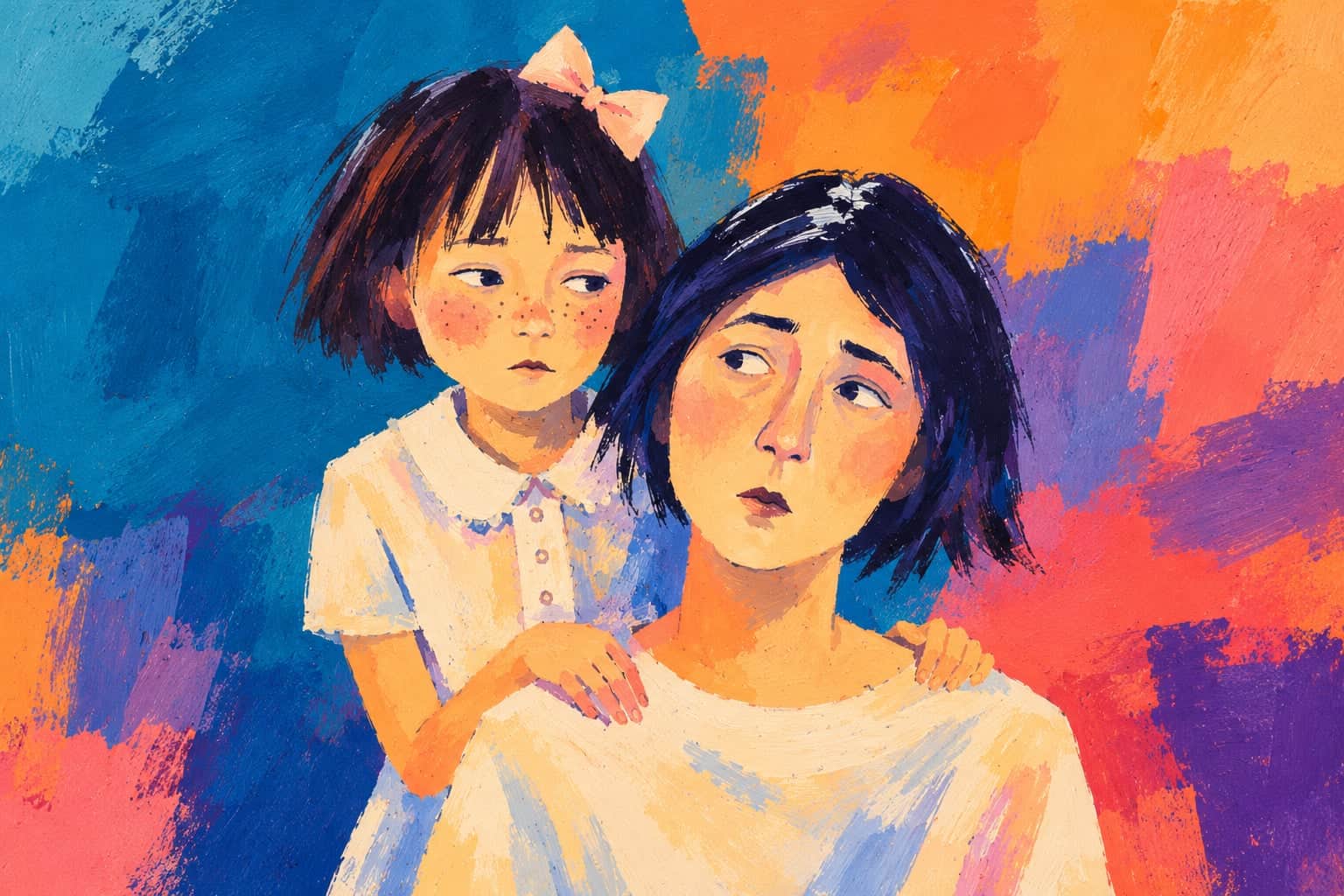
“Children are not things to be molded, but people to be unfolded.” ~Jess Lair
Growing up, I was often drawn to classmates who were soft-spoken and gentle. I admired how calm they seemed, because inside me was the opposite. I had a temper that flared at the smallest things.
I always gravitated toward people and situations that gave me a sense of peace, the very thing I didn’t have at home. As a child, I couldn’t understand why I craved that peace so badly. It took me becoming a parent to finally understand why.
My childhood home wasn’t peaceful. There was heavy drinking in the house, and my parents fought almost every night. Slowly, without any of us realizing it, that environment was breaking something inside my siblings and me.
The result was a child who grew into an adult carrying too much anger and irritability. People started calling me “short-tempered,” and eventually I accepted that label as simply who I was. I never once stopped to ask myself why I had become this way.
It was only after becoming a parent that I understood something important. A child’s growth begins in the environment of their home, long before anyone starts giving them lessons in right and wrong.
If we want our children to grow into successful, kind, grounded people, we have to give them a stable emotional foundation. A tree only bears good fruit when its roots have been cared for from the very beginning.
My own parents didn’t have much education, and I don’t think they ever realized how deeply the tension at home was affecting us. Perhaps that’s why, even now as adults, my siblings and I still carry traces of that environment with us.
Meeting My Opposite
Everything in my life began to shift when I got married. They say opposites attract, and that’s exactly how it was with my partner. Where I was quick to anger, he was calm, patient, and never one to panic.
His father had been in the military, so his childhood home was built on discipline and steadiness. That upbringing shaped him into someone remarkably even-tempered, and being close to him started to change how I saw myself.
I began to realize something I’d never questioned before: you don’t have to lose your temper over every small thing. Getting irritated just because you don’t feel like doing something ends up hurting you in the end, not just the people around you.
But old patterns don’t dissolve just because you can finally see them. My partner stayed calm and steady while I remained quick to anger. And without meaning to, I began raising my own child the exact same way I had been raised.
Seeing Myself Reflected Back
When my child was small, my outbursts were simply accepted without protest. Honestly, I was satisfied with that. I believed that raising my voice and reacting sharply was how I maintained discipline in the house.
I didn’t realize the damage I was doing underneath the surface. I wasn’t teaching discipline at all. I was planting fear, and my child began to associate every small mistake with the fear of my anger.
Slowly, my child started pulling away from me and growing closer to my partner instead. It wasn’t hard to understand why. He listened, stayed calm, and explained things with patience instead of volume.
I didn’t fully grasp what I had done until the day I experienced it myself, reflected back at me. One day, by accident, I tore a page out of my child’s notebook while tidying up.
The reaction was immediate and sharp: “Don’t you realize this is my school notebook? It’s not your property—you can’t just tear pages out whenever you feel like it.” The words themselves were ordinary, but the tone was unmistakable.
It was my own tone. My own sharpness, spoken back to me in a child’s voice. In that single moment, something in me went still, because I recognized exactly what I was hearing.
This was what I had been giving for years, and I was only now feeling what it was like to receive it. For the first time, I understood what I had actually been teaching at home.
The Decision That Changed Everything
That day, I made a decision that reshaped how I showed up as a parent. If I wanted my child to grow into a secure, emotionally healthy adult, I had to change first, not the other way around.
Whatever we consistently give our children, in tone, in patience, in reaction, is often what they eventually reflect back to us.
Who we are as parents shows up in our children, often more clearly than we’d like. They are mirrors of us, whether or not we’re ready to see our own reflection in them.
What I’d Want Every Parent to Know
Our children don’t just learn from what we tell them. They absorb who we are, moment by moment, especially in the moments we’re not consciously trying to teach anything at all.
The environment we create at home becomes the emotional foundation our children carry for the rest of their lives, long after they’ve grown up and left it behind. That’s a heavier responsibility than most of us realize while we’re in the thick of daily parenting.
If you find yourself repeating patterns you didn’t consciously choose—an unpredictable temper, harsh words, a habit of raising your voice when you’re overwhelmed—please know you’re not a bad parent. You’re likely repeating what was modeled for you, without ever having the chance to unlearn it.
But the moment you notice the pattern, you have the power to interrupt it. That noticing is the whole turning point. It’s the difference between passing pain forward and finally setting it down.
You can choose to pause before reacting. You can choose patience over panic, even when it’s hard, even when old habits pull you the other way. It won’t happen perfectly or all at once.
Start small. The next time you feel that familiar flash of irritation rising, try naming it silently to yourself before you speak. That tiny pause is often enough to change the entire tone of what comes next.
It also helps to apologize when you get it wrong. Telling a child “I raised my voice, and that wasn’t fair to you” doesn’t undermine your authority. It teaches them that accountability and love can exist in the same sentence.
Your children are watching you far more closely than they’re listening to you. The most powerful gift you can give them isn’t perfection. It’s your willingness to grow, to reflect, and to change when you see something in yourself that needs healing.

About Jyoti Yadav
Jyoti Yadav writes about simple living, minimalism, and finding clarity in a world that often encourages excess. Her life journey reflects experiences that many readers can relate to, making her writing genuine, practical, and deeply personal. Through her articles, she shares real-life insights that help readers navigatge a complicated world with greater ease, purpose, and peace of mind. You can explore more of her work at jyotisimplelife.com.
Get in the conversation! Click here to leave a comment on the site.
from Tiny Buddha https://ift.tt/brkA0Vv




 and a mother of four. Find her at


